
Ending forced child labour requires more than policies, it requires awareness, collaboration and coordinated action.
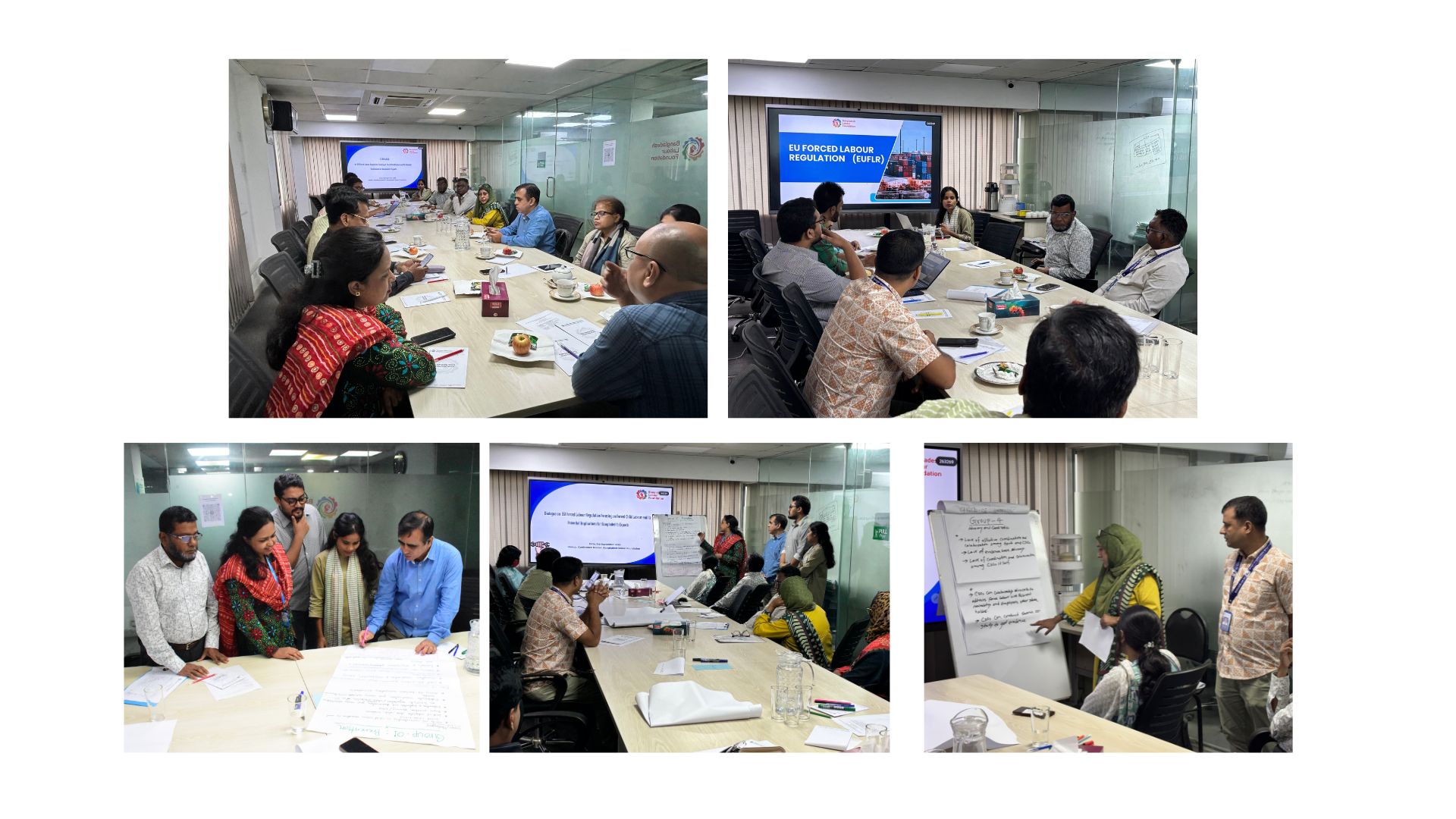
With this understanding, Bangladesh Labour Foundation (BLF) organised a capacity-building workshop for members of the Child Labour Elimination Platform (CLEP) under the theme, “EU Forced Labour Regulation (EUFLR): Focus on Forced Child Labour and Its Implications for Bangladesh’s Exports.”
The workshop helped participants better understand the EU Forced Labour Regulation, the UK Modern Slavery Act and the U.S. import ban on goods produced wholly or partly with forced labour. Members also discussed what these international measures could mean for Bangladesh’s export-oriented sectors and supply chains.
A major focus of the workshop was the role of civil society particularly CLEP in preventing and addressing forced child labour. Participants explored how CSOs can identify risks, document evidence, raise awareness, support affected children and families, and bring the issue into meaningful dialogue with government, employers, trade unions, buyers and other stakeholders.
Working in four thematic groups, CLEP members identified key gaps, shared practical recommendations and discussed possible areas for collective action. Most importantly, the discussion moved from understanding to action, resulting in a roadmap and stakeholder-engagement framework to guide CLEP’s future initiatives.
As a member of CLEP, BLF remains committed to working alongside fellow organisations and relevant stakeholders to build responsible supply chains that are free from forced labour and child labour.